
How We're Filming with Clarehouse: Observation, Patience, and Trust
Some films are made by adding. Ours is being made by removing. On the Clarehouse documentary, our process is built around a single idea: get out of the way, and let the story reveal itself.
The film centers on Clarehouse, a social model end-of-life care home in Tulsa, Oklahoma. But it is growing into something larger than a single facility. At its heart, this is a film about the social model of care that America needs, a different way of facing the end of life, with Kelley Scott as the leader of that movement and Clarehouse as the ultimate proof that the idea works.
A story like this cannot be forced or staged. It has to be observed. So from the beginning, we made deliberate choices about how to shoot it, choices that take more time and patience, but that we believe are the only honest way to tell it.
The Approach: Observe, Don't Explain
We are filming Clarehouse in a deeply observational style. Most of our shots are locked off on a tripod, and we let scenes play out without interference. This takes longer. It asks for patience from everyone involved. But the payoff is real: over time, the camera disappears, and the people in front of it forget we are there. What we capture in those moments is something you cannot direct or fake.
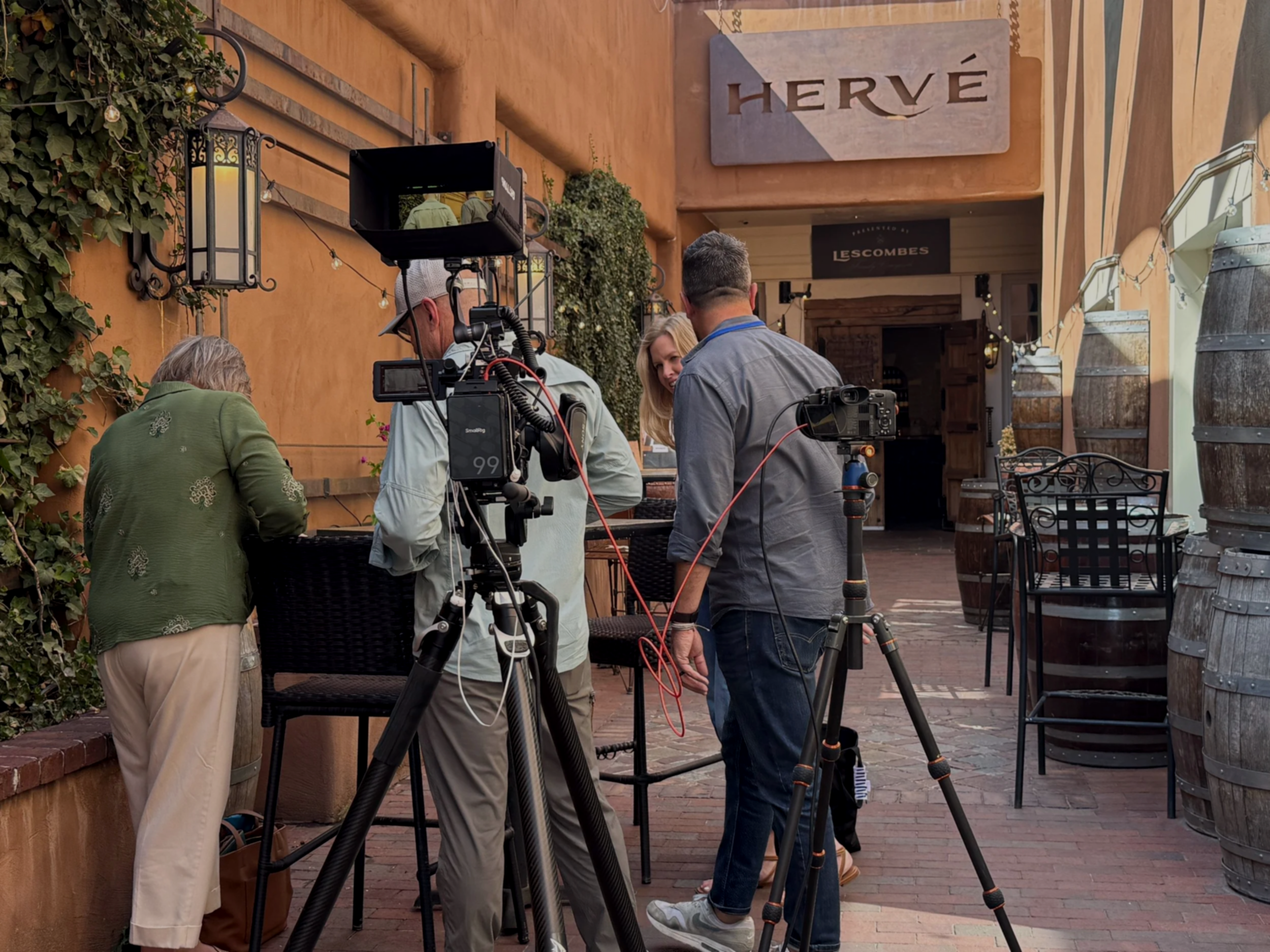
On location in Santa Fe, New Mexico
The film draws inspiration from documentaries like All That Breathes and Honeyland, works that trust stillness, atmosphere, and the quiet accumulation of real life. That is the tradition we are reaching for.
We are not purely observational, though. We also conduct foundational interviews, which help us understand our characters and the shape of the story more deeply. But even with those, the guiding instinct is the same: show, don't tell. We want the audience to feel this story, not be lectured through it.
The Look: Natural, but Crafted
We are shooting on the Sony FX6, and in the field we use very little lighting. That restraint is intentional. But make no mistake, the scenes are still lit, often with just a single light, and that is where our director of photography earns his keep.
Brad Knull is our DP on this project. He is based in Tulsa but has worked all over the world, and he and I have now collaborated on several films together. Brad's ability to light a scene with almost nothing, and make it feel completely natural, is one of the things elevating this film. He brings an extraordinary eye, and a calm presence on set that suits the sensitivity of the environment we are working in.
Trusting the Frame
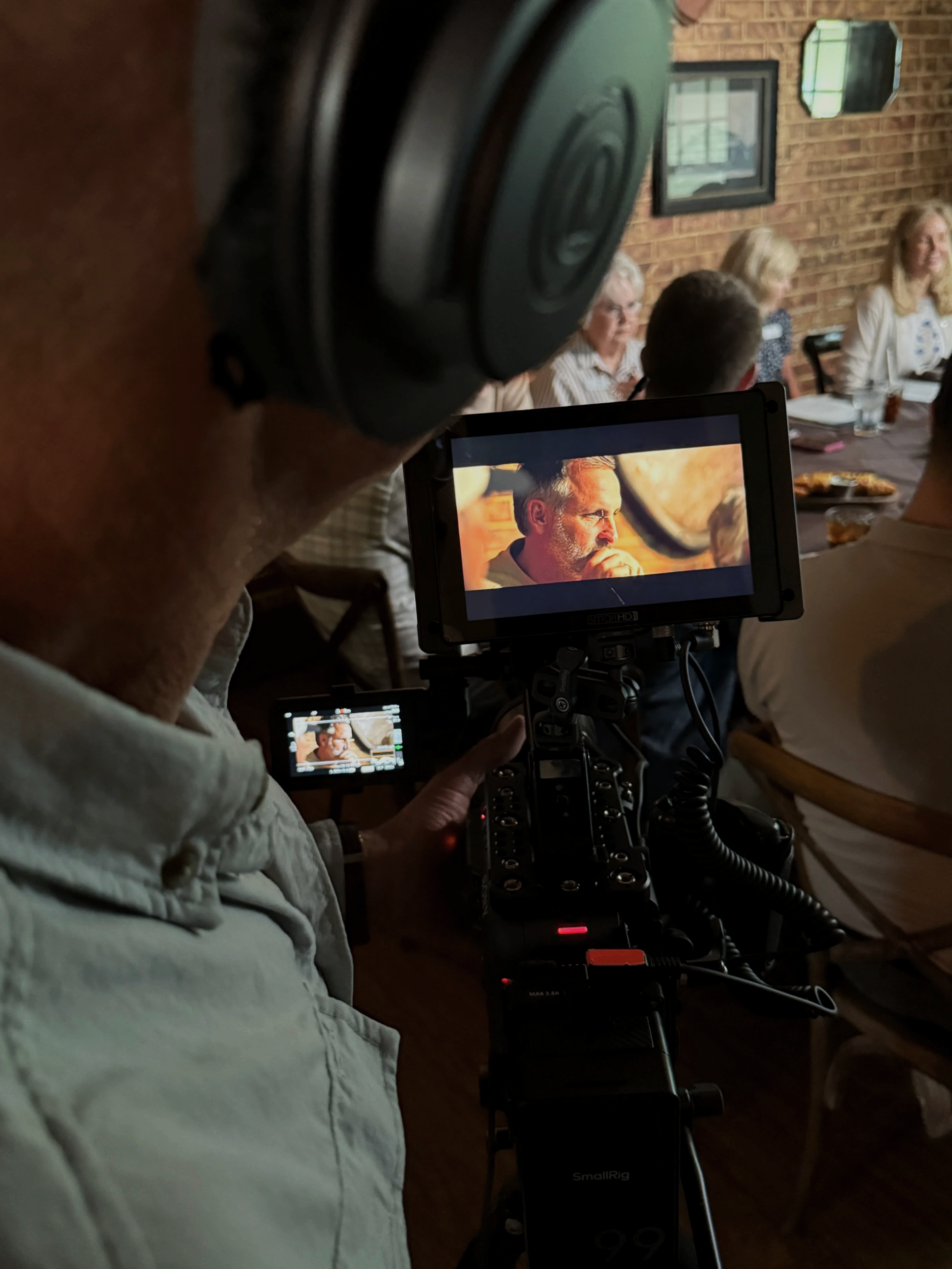
Director of Photography Brad Knull filming in Rockwall, TX
There is a principle at the center of how we are making this film: we trust the building, the people inside it, and the audience to do the work.
You can see that philosophy in how we film Caitlin, one of the film's central figures, who is working to open a social model end-of-life care home of her own. Her story is, in a sense, the movement in motion: proof that what Kelley built in Tulsa can take root elsewhere. Her thread carries more forward energy, the pursuit of a dream, and we let that energy live inside a still frame. The camera stays locked down while Caitlin moves through it. The stillness holds, and she brings the life. It is a small example of a larger belief: that if you build the right frame and trust what is real, you rarely need to chase it.
Why It Matters
This is slow, patient, deliberate filmmaking. It is not the fastest way to make a documentary, and it is not the easiest. But for a story this intimate, and this important, about something as universal and as private as how we care for one another at the end of life, we believe it is the right way. The camera waits. The people inside Clarehouse live their lives. And we trust that what is true, both the quiet daily work of this one house and the larger movement it represents, will find its way to the screen.